
Quick Answer
To identify your personal values, review the moments when you felt proud, energized, or upset at work. Look for patterns across those stories, then name the principles behind them, such as honesty, growth, or independence. Next, narrow your list to the five core values that matter most. These become a filter for career choices, helping you choose roles and projects that genuinely fit who you are.
Key Takeaways
- Personal values are the core beliefs that guide how you live and work.
- You find your values by studying your own highs and lows, not by taking a quiz.
- Strong emotional reactions reveal which values matter most to you.
- A short list of about five core values guides decisions better than a long one.
- Values act as a filter for career choices, helping you avoid the wrong roles.
- Your values form the backbone of a strong personal brand, the impression others have of your work.
Table of Contents
You can do everything right and still feel stuck. You earn the degree, land the job, and do solid work, yet something still feels off.
Often, the problem is a values mismatch, meaning your work does not line up with what matters most to you. The fix starts with identifying your personal values.
Most early-career professionals never pause to define their own terms, instead chasing titles and salaries. This guide explains what personal values are, why they shape your career, and how to find yours. You will also see how they support your entry-level job search and your personal brand.
What Are Personal Values?
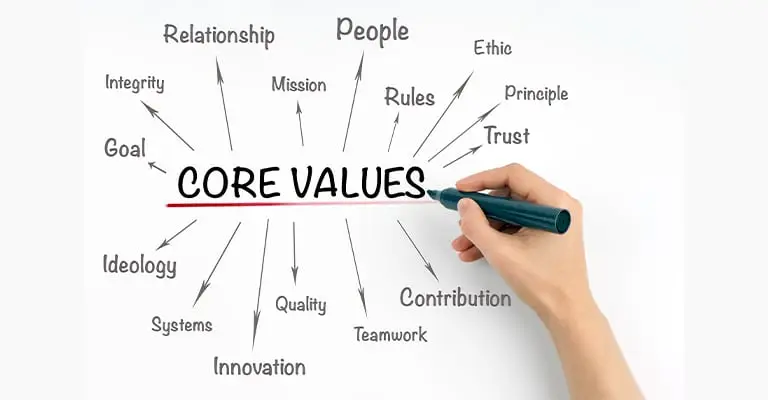
Personal values are the core beliefs that guide how you live and work. They shape your choices, your standards, and your sense of right and wrong, serving as an inner compass.
They keep your career on course because, without them, every choice starts to feel random.
Researchers have studied human values for decades. Psychologist Shalom Schwartz identified ten basic values that guide people across cultures, from security to achievement (Schwartz). Each value connects to the kind of work and workplace you naturally prefer.
Common personal values include:
- Growth: You want to keep learning and improving.
- Integrity: You want your actions to match your word.
- Autonomy: You want freedom over how you work.
- Security: You want stability and a steady path.
- Impact: You want your work to help others.
- Creativity: You want to build and invent new things.
Values are not the same as goals. A goal is something you achieve, while a value is something you live by every day.
Why Your Personal Values Shape Your Career
Your career is a long series of choices: which job to take, which team to join, which offer to accept. Each of those choices gets easier once you know your values.
Clear personal values cut through career confusion because they work as a decision filter. They quickly tell you what fits and what does not.
When your work matches your values, you feel motivated and steady. When it clashes, you feel drained, even with good pay. That is exactly why two people can hold the same job yet feel completely different about it.
Your values also shape your personal branding. The projects you choose and the story you tell both flow directly from what you care about. They also anchor your personal brand statement, a short line about who you are. A personal brand website gives that story a home. It shows what you stand for in one place.
What Happens When Your Values and Job Clash

A values mismatch is costly. When your work clashes with your values, your motivation drops while your stress quietly builds. Career counselors connect this gap to low job satisfaction and even burnout (NCDA).
The research makes this clear. Only about 20% of employees worldwide felt engaged at work in 2025 (Gallup). In other words, most people feel disconnected from their work every day. Satisfied employees are about 13% more productive (Values Institute). A strong match between your values and your job is one of the biggest drivers of that satisfaction.
A values match matters to job seekers, too. Nearly half of workers would refuse a job that does not reflect their values (Randstad). In fact, 29% have already quit a job because they disagreed with their leaders’ views.
The lesson is simple: a values match is not a soft bonus. It is a foundation that protects both your energy and your long-term growth.
How to Identify Your Personal Values

To identify your personal values, you study your own experiences and look for patterns in them. The process takes honest reflection, not a quick personality quiz.
This method uses past moments to reveal the principles you already live by, and it works in five clear steps.
List Your High Points and Low Points
Write down five times you felt proud or fully alive at work or school. Then list five times you felt angry, drained, or uneasy. Be specific: name the project, the people, and what actually happened. Your strongest reactions point straight to the values underneath.
Find the Pattern Behind Each Moment
Look at each story and ask one simple question: What mattered to me here? Maybe you felt proud because you solved a hard problem on your own, which points to autonomy. Maybe a moment upset you because a leader broke a promise, which points to integrity.
Name Your Values
Now turn those principles into single words or short phrases, using a values list to help. Start broad and aim for about twenty values that feel true to you. Sample words like honesty, growth, freedom, and stability can get you started. Do not filter anything yet; write down everything that feels right.
Narrow Your List to Five
A long list cannot guide you, so it needs to be trimmed. Some career centers suggest a simple approach (u003ca href=u0022https://careerservices.upenn.edu/blog/2025/04/03/values-based-career-decision-making-aligning-your-work-with-what-matters-most/u0022 target=u0022_blanku0022 rel=u0022noreferrer noopeneru0022u003ePenn Career Servicesu003c/au003e). From your long list, cross off the ten least important values, then cross off five more. Rank the five that remain, and those are your core values.
Test Each Value Against Real Choices
Check your list against real life. Imagine turning down a high-paying job because it clashed with one of your values. Could you actually do it? If yes, that value is real. If you give in right away, it may be a wish rather than a true value.
Tools and Resources to Identify Your Personal Values
You do not need fancy software to find your values. A few free tools can speed up the work. Each one gives you a starting point and an easy way to reflect.
- A printed values list helps you spot the words that fit you.
- A free strengths or character survey can reveal traits you overlook.
- A simple journal shows your patterns over time.
- A trusted mentor can describe what you stand for from the outside.
Once you know your values, you can develop your personal brand around them.
Turn Your Values Into Career Decisions

Values only help when you actually use them, so treat your five core values as a filter for career moves.
A values filter compares each opportunity against what you care about most. Put it to work with these simple if/then rules.
- If a role pays well but conflicts with your top value, keep looking.
- If two offers feel equal on paper, choose the one that better aligns with your values.
- If your current job clashes with three or more of your values, start planning an exit.
- If a project supports a core value, then volunteer for it and grow your brand.
Your values also shape how you present yourself online. Use them to optimize your LinkedIn profile so your headline and summary match what you care about. They can guide an audit of your digital footprint. That footprint is everything about you that appears online when someone searches your name. From there, you can clear away anything that sends the wrong message. They also help you align your resume, LinkedIn profile, and personal website into a cohesive story. A professional online presence built around your values helps the right people find you.
Common Mistakes When You Identify Your Personal Values
Many people get values wrong in the same ways. Each mistake weakens the link between your values and your career.
Copying Someone Else’s Values
Borrowed values feel hollow, and they collapse the moment real pressure arrives. It is tempting to copy a mentor, a famous founder, or a viral post, because their values can sound impressive. The problem is that those values are not yours, so they offer no guidance when a hard choice appears. Instead, start from your own experience and notice what genuinely moves you. Then name those values honestly, even if they look ordinary on paper rather than polished online.
Choosing Values That Sound Impressive
Choose what is real, not simply what looks good online. Some people pick values that sound impressive, like innovation or excellence, even when those words do not match their behavior. Recruiters and coworkers tend to notice that gap quickly, and it quietly undermines your credibility. An honest value guides you far better than a flashy one, so choose words you can back with real stories. Something quiet and true will always outlast something loud and empty.
Keeping Too Many Values
A list of fifteen values guides nothing, because too many priorities pull you in different directions at once. When everything matters, nothing stands out, and your decisions become harder than they should be. A short list forces you to choose, so keep cutting until only the strongest five remain. These five should feel essential rather than merely nice to have, the ones you would protect even under real pressure. Fewer values give you a sharper, faster filter for choices.
Confusing Values With Goals
Money is a goal, while security is the value sitting behind it. People often list goals and mistake them for values. A goal is something you reach, like a title or a salary, while a value is the reason it matters. When you chase goals without understanding the values beneath them, even real success can feel strangely empty. Look under each goal, ask what need it serves, and name the value, not just the target.
Skipping Regular Reviews
Your values can shift as you grow, and what matters today may look different within a few years. New jobs, mentors, and major life events all reshape your priorities. A list you never revisit slowly stops fitting your real life, which makes it a poor guide. Reviewing it about once a year keeps it current, and moments like a promotion or move are natural checkpoints. That habit keeps your brand and your choices aligned with who you are now.
People Also Ask

What are the 5 most common personal values?
Five values come up most often: integrity, growth, family, security, and freedom, with honesty, kindness, and independence close behind. These appear across cultures and age groups, which is exactly why they feel so familiar. Still, your own top five may look different, and that is completely fine. The goal is not to choose the popular ones but to name the values that genuinely drive your choices. A short, honest list will always serve you better than a long, impressive one.
How do personal values affect career choice?
Personal values work as a filter for almost every career choice. When a job fits your values, you feel motivated and steady. When it clashes, you feel drained, even with strong pay. They shape which roles you chase, which offers you accept, and which ones you turn down. Your values even guide smaller calls, like which projects to join. Knowing these points, you are directed toward teams where you fit, and that fit is what turns a job into a career.
Can your personal values change over time?
Yes, personal values can shift as you gain experience and face new challenges. A value like adventure may fade as stability grows more important. Early on, freedom might matter most, while security or impact may take the lead a few years later. This change is normal and healthy, not a sign of being unfocused. Reviewing your core values about once a year keeps them current. Big life events, like a new job or a move, are natural moments to check in.
What is the difference between values and goals?
A value is a principle you live by every day, such as honesty. A goal is a result you work toward, such as a promotion. Goals have a finish line, but values do not, so you can reach one goal and set another. Underneath those changing goals, your values usually stay the same. In fact, your values should guide which goals you choose. When goals and values align, your effort feels meaningful rather than hollow.
How many core values should you have?
Most people work best with three to five core values. A short list is easier to remember and apply under pressure. When you keep too many, they start to compete and cancel each other out, leaving you frozen instead of decisive. Three to five gives you enough range without losing focus. You can still hold extra values loosely in the background. Your core few, though, should be the ones that settle your hardest decisions when the stakes are highest.
Your Personal Values Checklist
| Done | Step |
|---|---|
| ☐ | List five high points and five low points. |
| ☐ | Name the principle behind each moment. |
| ☐ | Build a starting list of about twenty values. |
| ☐ | Narrow your list to five core values. |
| ☐ | Test each value against a real choice. |
| ☐ | Use your values to filter career decisions. |
| ☐ | Review your values once a year. |
Conclusion
When you identify your personal values, you gain a clear guide for your entire career. You stop chasing roles that merely look good and start choosing work that genuinely fits. Your decisions come faster, your story sharpens, and your confidence grows.
Your values deserve a place where the right people can actually see them. Build your personal brand website today and turn your values into a presence that works for you around the clock.
Frequently Asked Questions
How do I identify my personal values if I feel unsure?
Start with your feelings rather than a ready-made list. Notice the moments when you felt proud, energized, calm, or upset at work or school. Each strong reaction reveals a value that matters to you. Write down what mattered in those moments, and clear patterns will emerge over time. Those recurring patterns are your core values. You do not need a perfect answer on day one; drafting, testing, and refining the list is the real work.
Why do personal values matter for a personal brand?
Your personal brand is the story you tell about your work. Your values sit right at the heart of that story. They explain why you choose certain projects, roles, and ways of working. When your brand reflects your real values, it reads as honest, and people trust honest brands more than polished ones. Over time, that trust turns into referrals, interviews, and opportunities. Your values are the one part of your brand that competitors cannot copy.
What if my personal values clash with my current job?
A clash is useful information, not a personal failure, and it often explains why a good job still feels draining. Start by naming which value is being blocked. Then look for small fixes, like adjusting your tasks or setting boundaries. You can also talk with your manager about work that suits you better. If the clash runs deep and never lets up, begin planning a move. A steady mismatch slowly wears down your energy and growth.
Are personal values the same as work ethic?
No, the two are related but clearly different. Work ethic is how hard and how consistently you work, while personal values are what you care about and why. A strong work ethic can serve almost any value, from impact to security to growth. That is why two people can work equally hard for very different reasons. Knowing your values tells you where to aim that effort. Effort without direction often leads to burnout, not progress.
How long does it take to identify your personal values?
You can draft a first list in about an hour, though refining it naturally takes longer. Most people sharpen their values over a few weeks, testing each one against real choices and real feelings. During that process, some words quietly drop off while others grow stronger. Major life events can shift your priorities, too. Plan to revisit the list about once a year. Your values are meant to be stable, not completely frozen.
Should I share my personal values publicly?
You do not need to post your values word-for-word, since a public list can feel forced or fake. Instead, let them show through your actions by choosing projects, posts, and causes that match what you care about. Write about the lessons that reflect your principles, and over time, people will notice the pattern and trust it. Actions reveal your values far better than labels do, so show them rather than simply announcing them.
Can a values exercise help with a career change?
Yes, a values exercise is a powerful tool during a career change. A clear list shows which parts of a new field will fit you. It also helps you spot roles that match your priorities. It gives your story a steady thread, so you can explain your move in terms of what matters to you. That message feels honest to employers and to yourself, turning a risky pivot into a clear, guided choice.
Do employers care about a candidate’s personal values?
Many employers do, even when they label it culture fit. Culture fit is really a values match between you and the company. Recruiters look for people who share the team’s core principles, since poor cultural fit drives many workers to quit. Candidates who know their own values interview with far more clarity, asking sharper questions and judging a company more accurately. In the end, shared values tend to lead to longer, happier, and more productive careers.
Glossary
| Term | Definition |
|---|---|
| Personal Values | The core beliefs that guide how you live and work. |
| Core Values | The small set of values, usually five, that carry the most weight in your decisions. |
| Personal Brand | The public story and impression people hold about your professional self. |
| Values Filter | A method of judging choices by how well they match your core values. |
| Culture Fit | How well a person’s values and style match an organization’s. |
| Self-Awareness | A clear understanding of your own strengths, values, and motives. |
| Career Alignment | The state where your work matches your values, skills, and goals. |
| Digital Footprint | The trail of content and profiles that appear when someone searches your name. |