Quick Answer
A resume, LinkedIn profile, and personal brand website each serve a different purpose in your career toolkit. Your resume is a targeted summary for job applications. LinkedIn helps you network and get discovered by recruiters. A personal brand website gives you full control over your story, design, and narrative, making it the most flexible and enduring asset of the three. Most early-career professionals benefit from using all three together, but a personal website anchors the entire strategy.
Key Takeaways
- A resume is a focused snapshot designed for a specific job application, but it cannot tell your full story.
- LinkedIn expands your reach to recruiters and peers, yet you share control of your profile with the platform.
- A personal brand website lets you own your narrative, showcase projects, and control your design without platform limits. It is the only tool that grows with you throughout your career.
- 70% of employers check candidates online during the screening process, making a digital presence essential.
- Each tool serves a distinct role, but your personal brand website ties your resume and LinkedIn together into a cohesive identity.
- If you have limited experience, a personal website helps you highlight projects, skills, and personality that a resume cannot.
- The best career strategy uses a resume for applying, LinkedIn for networking, and a personal website as the centerpiece for storytelling and brand ownership.
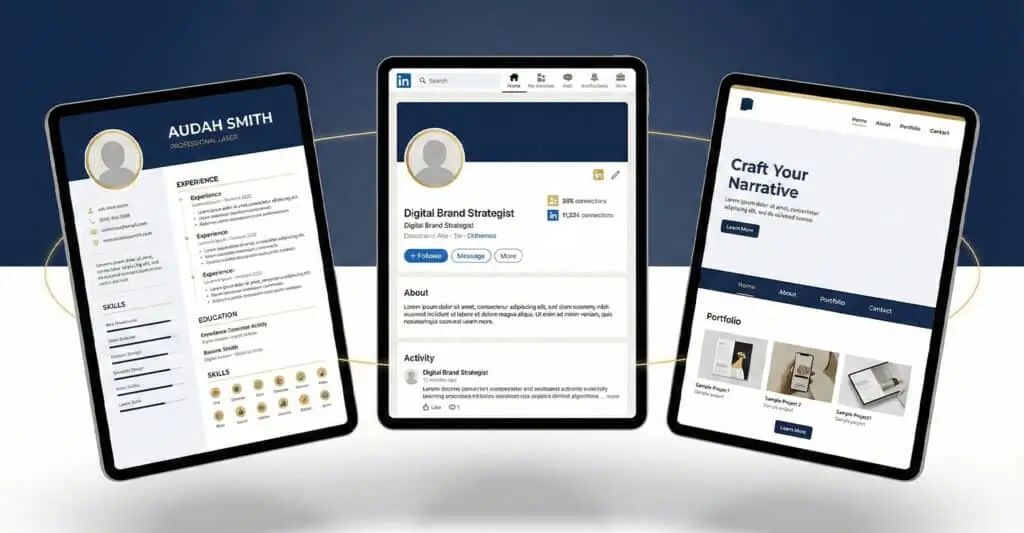
You have spent years earning your degree, building skills, and preparing for the next step. But when a recruiter searches your name online, what do they find? The answer depends on the tools you use to present yourself.
Most early-career professionals rely on just one or two of these tools: a resume, a LinkedIn profile, or a personal brand website. Each one plays a specific role. A resume targets a single job application. LinkedIn connects you with a network. A personal website tells your complete story and ties everything together.
The challenge is that no single tool does everything. If you only use a resume, recruiters who search your name may find nothing meaningful. In fact, 60% of hiring managers say employers should screen all applicants’ social media profiles (Harris Poll / Express Employment Professionals, 2023). If you use only LinkedIn, you are limited to a template that every other candidate uses. A personal brand website fills the gaps that both leave behind, giving you a platform you fully own and control.
In this post, you will learn what each tool does best, where each one falls short, and how to combine all three into a professional career toolkit that helps you stand out. If you want a deeper look at how personal brand websites help professionals advance their careers, explore our complete guide.
What Is a Resume and What Does It Do Best?
A resume is a concise document that summarizes your education, work experience, skills, and achievements. It is typically one to two pages long. You tailor it for each job application, focusing on the qualifications that match the position.
Strengths of a Resume
A resume is the standard document employers expect when you apply for a job. Applicant tracking systems, known as ATS, are designed to scan resumes for keywords and qualifications. This makes your resume the entry ticket to the hiring process.
Resumes also force you to be concise. Because space is limited, every line must serve a purpose. This structure helps hiring managers quickly assess whether your background fits the role.
Limitations of a Resume
A resume only provides a snapshot. It cannot convey your personality, creative projects, or the full context behind your achievements. It follows a rigid format that limits how you present your story.
If you rely solely on a resume, you are competing with hundreds of candidates using the same template. An eye-tracking study found that recruiters spend an average of just 7.4 seconds on their initial scan of each resume (Ladders, 2018). That narrow window makes it nearly impossible to differentiate yourself on paper alone.
A resume opens doors, but it cannot show employers the full picture of who you are. That full picture is exactly what a personal brand website delivers.
What Is LinkedIn and How Does It Help Your Career?
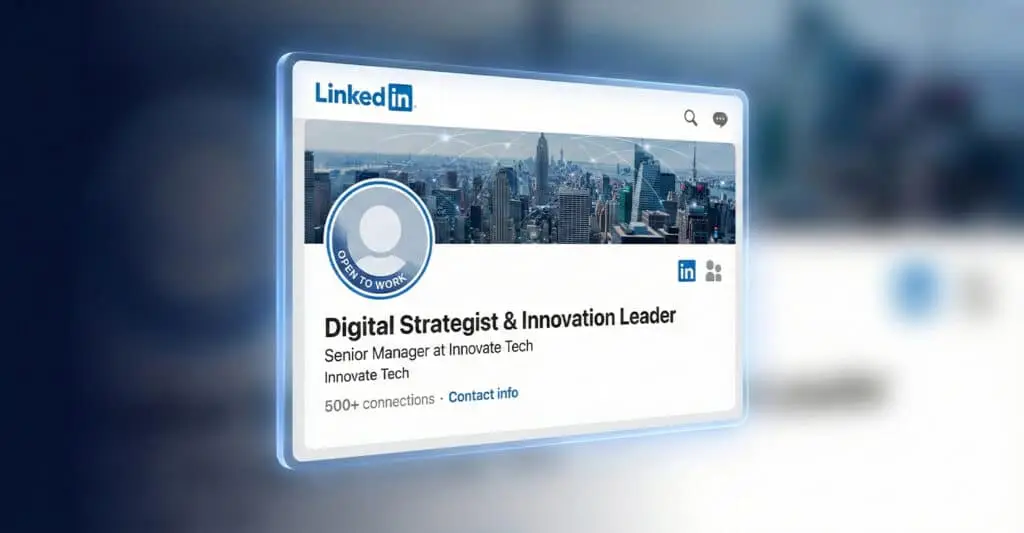
LinkedIn is a professional networking platform with over 1.2 billion members worldwide (LinkedIn Pressroom, 2025). Your LinkedIn profile functions as a digital resume that recruiters and hiring managers can discover through search.
Strengths of LinkedIn
LinkedIn gives you access to a massive professional network. About 72% of recruiters use LinkedIn when hiring new talent (The Social Shepherd, 2026), which means your profile can attract opportunities even when you are not applying. The platform also allows you to share posts, articles, and updates that establish thought leadership in your field.
LinkedIn requires endorsements, recommendations, and connections to build credibility. These social proof elements give employers confidence in your abilities before they ever speak with you.
Limitations of LinkedIn
LinkedIn uses a standardized profile template. Every user has the same layout, which limits how much you can customize your presentation. You cannot control the design, add custom sections, or embed interactive projects.
The platform also owns your content and controls how your profile appears in search results. Algorithm changes can affect your visibility overnight. If LinkedIn changes its policies or shuts down a feature, you lose access to content you invested time building.
LinkedIn helps you get discovered, but you share control of your professional story with the platform. A personal brand website solves this problem by putting ownership entirely in your hands.
What Is a Personal Brand Website?
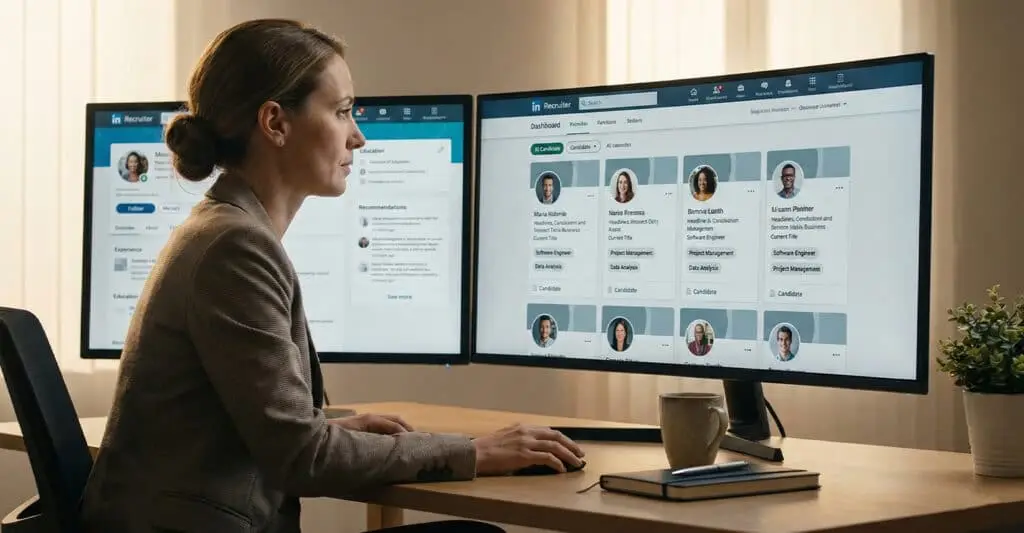
A personal brand website is a dedicated site that you own and control. It serves as a central hub for your professional identity, combining your background, projects, achievements, and personality in one place. Unlike a resume or LinkedIn, a personal brand website gives you complete creative freedom.
Strengths of a Personal Brand Website
Ownership is the most important advantage. You control the design, content, structure, and URL. No algorithm decides how visible you are, and no template restricts how you present yourself.
A personal website lets you showcase work samples, case studies, videos, testimonials, and creative projects. This is especially valuable if you have limited professional experience. You can highlight passion projects, volunteer work, academic research, or freelance contributions that a resume would never include.
Personal brand websites also support search engine optimization. When someone searches your name, your website can appear as a top result. This gives you the power to shape what employers see first.
Unlike a resume that expires with each application or a LinkedIn profile tied to a platform, your personal website travels with you across every career stage. It compounds in value over time as you add projects, achievements, and depth to your story.
Limitations of a Personal Brand Website
A website requires an initial investment of time and, in some cases, money. You also need to keep it up to date. However, these are small tradeoffs for a tool that gives you complete control over your professional narrative.
If you are not sure where to start, Bright Future Branding specializes in building personal brand websites that tell your authentic story and help you stand out to employers.
A personal brand website is the only tool in your career toolkit that you fully own. That ownership makes it the foundation of a strong professional identity.
Resume vs LinkedIn vs Personal Website: Side-by-Side Comparison
The differences between a resume, LinkedIn, and a personal brand website become clearer when you compare them directly. This table highlights the strengths and gaps of each tool.
| Feature | Resume | Personal Website | |
|---|---|---|---|
| Content Control | Full (within format limits) | Limited by template | Complete ownership |
| Customization | Minimal (standard format) | Low (fixed layout) | Unlimited (design freedom) |
| Audience Reach | Sent to specific employers | Discoverable by recruiters | Found via search engines |
| Storytelling Depth | Low (1–2 pages) | Moderate (summary + posts) | High (unlimited content) |
| Portfolio Support | Not supported | Limited media uploads | Full project showcases |
| Platform Dependency | None (you own the file) | High (LinkedIn controls it) | None (you own the domain) |
| ATS Compatibility | Designed for ATS | Not applicable | Not applicable |
| Networking | Not applicable | Built-in social features | Contact forms and links |
| Cost | Free | Free (premium optional) | Domain + hosting costs |
| Longevity | Expires with each application | Active while platform exists | Permanent asset you own for life |
This comparison shows that each tool excels in a different area. A resume is built for applications. LinkedIn is built for networking. A personal website leads in most categories, from storytelling and customization to ownership and longevity.
When to Use Each Tool in Your Career
Knowing when to use each tool matters as much as understanding what each one does. Your situation determines which tools to prioritize and how to combine them.
If/Then Decision Rules
- If you are applying for a specific position, then tailor your resume to match the job description and submit it through the employer’s application system.
- If you want recruiters to find you without applying, then optimize your LinkedIn profile with relevant keywords and an engaging headline.
- If you want to control what employers see when they search your name, then build a personal brand website that ranks for your name.
- If you have projects, volunteer work, or creative output that a resume cannot capture, then add them to your personal brand website.
- If you want one asset that supports every stage of your career, then invest in a personal brand website, because it is the only tool that grows with you regardless of job changes or platform shifts.
Career Stage Recommendations
College students seeking internships: Start with a strong resume and LinkedIn profile. Then add a personal website to showcase class projects, extracurricular leadership, and portfolio pieces that set you apart from other candidates.
Recent graduates entering the job market: Use all three tools. Employers project just a 1.6% increase in hiring for the Class of 2026 (National Association of Colleges & Employers Job Outlook 2026), which means standing out matters more than ever. A resume gets you through ATS filters. LinkedIn connects you with hiring managers. A personal website ties everything together by telling the story behind your qualifications.
Professionals exploring a career change: Your personal website becomes your most valuable tool. It lets you reframe your experience for a new industry without the constraints of a resume format or a fixed LinkedIn template.
Common Mistakes That Weaken Your Professional Presence

Many early-career professionals make avoidable errors when building their career toolkit. These mistakes can reduce your visibility and hurt your credibility with employers.
Mistakes to Avoid
- Using the same resume for every application instead of tailoring it to each role.
- Leaving your LinkedIn profile incomplete or using a generic headline like “Open to Opportunities.”
- Having no personal website, which means employers find random social media results instead.
- Ignoring your digital footprint. Seventy percent of companies use social media to research job candidates (Harris Poll / Express Employment Professionals, 2023).
- Treating these tools as separate instead of creating a consistent brand across all three.
Mini Checklist: Professional Presence Audit
| Audit Item | |
|---|---|
| Does your resume match the job description you are targeting? | ☐ |
| Is your LinkedIn profile complete with a professional photo, headline, and summary? | ☐ |
| Does a Google search of your name return results you are proud of? | ☐ |
| Do your resume, LinkedIn, and website tell a consistent story? | ☐ |
| Is your personal website up to date with your latest projects and experience? | ☐ |
How to Build a Career Toolkit That Works Together
The most effective approach uses all three tools in a coordinated strategy. Here is a step-by-step process for building a professional career toolkit.
- Start with your resume. Write a clear, ATS-friendly resume tailored to your target role. This becomes the foundation for your other materials.
- Build your LinkedIn profile. Use your resume content as a starting point, then expand your summary and add media, skills, and recommendations.
- Create your personal brand website. Add your full story, including projects, volunteer work, testimonials, and personality. Link to it from your resume and LinkedIn profile.
- Align your messaging. Make sure your job title, summary, and key skills are consistent across all three platforms.
- Update regularly. Review your toolkit every quarter and refresh it with new accomplishments, skills, and projects.
This layered approach gives employers multiple ways to learn about you. Your resume gets through the ATS. Your LinkedIn profile builds network connections. Your personal website becomes the centerpiece, delivering the complete story that neither a resume nor LinkedIn can tell on their own.
Conclusion: Take Control of Your Career Story
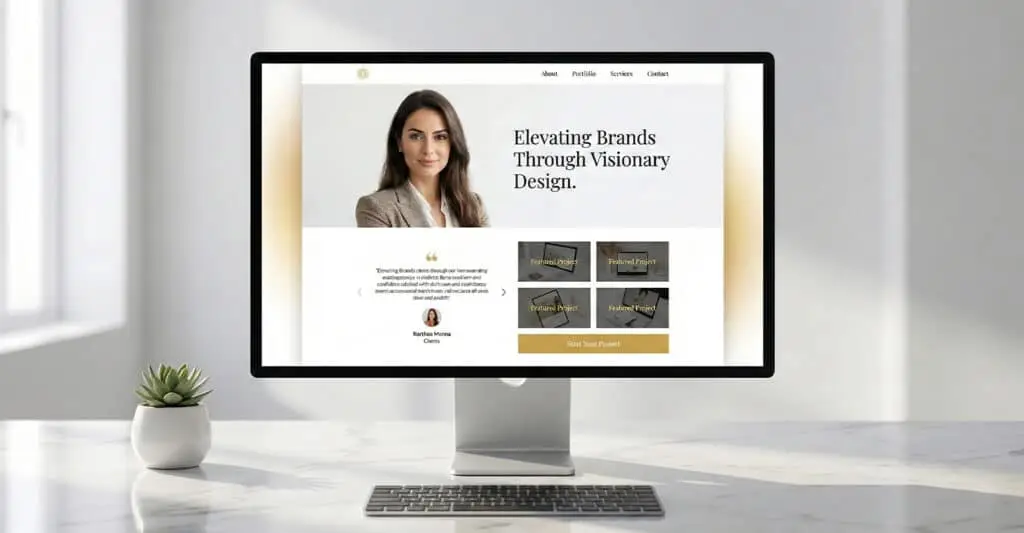
When you compare a resume vs LinkedIn vs a personal website, the answer is not about choosing one over the others. Each tool plays a role in how employers discover, evaluate, and remember you.
Your resume gets you through the door. LinkedIn expands your reach. But a personal brand website is the anchor of your professional career toolkit. It is the only asset you fully own, the only platform where your story has no limits, and the only tool that compounds in value across every career stage.
Seventy percent of companies use social media to research job candidates (Harris Poll / Express Employment Professionals, 2023). If you want to control what they find, start building your personal brand website today. Bright Future Branding can help you create a professional, authentic website that tells your story and supports your career goals.
People Also Ask
Do I need all three: a resume, LinkedIn, and a personal website?
For most early-career professionals, yes. Each tool serves a distinct purpose, but your personal brand website has the broadest impact. It is the only one that you fully own and that works for you around the clock.
Can a LinkedIn profile replace a resume?
No. LinkedIn is not formatted for applicant tracking systems. Most employers still require a resume as part of their formal application process.
Is a personal brand website worth it if I have no work experience?
Yes. A personal website lets you highlight academic projects, volunteer work, leadership roles, and skills that a resume has no room for.
How much does a personal brand website cost?
Costs vary. A basic site with a custom domain can cost as little as $50 to $150 per year. Working with a specialist like Bright Future Branding provides a professionally designed site that reflects your unique story.
What should I put on my personal brand website?
Include a professional bio, your resume or career highlights, work samples, project descriptions, testimonials, and a contact form. Anything that helps employers understand who you are belongs on your site.
FAQs
What is the main difference between a resume and a LinkedIn profile?
A resume is a targeted, one-to-two-page document you tailor and submit for a specific job application. It is designed to pass through applicant tracking systems and reach a hiring manager. LinkedIn is a searchable online profile that recruiters can discover at any time, even when you are not actively applying. Your resume focuses on qualifications, while LinkedIn adds networking and social proof to your professional presence.
Can I use my LinkedIn profile as my personal website?
LinkedIn can supplement your online presence, but it cannot replace a personal website. You do not own your LinkedIn profile, and you cannot customize its design, structure, or URL. LinkedIn also controls how your content appears in search results and can change its features at any time. A personal brand website gives you full creative control and stays with you regardless of platform changes.
How often should I update my resume?
Update your resume every time you gain new experience, complete a major project, earn a certification, or begin targeting a different type of role. At a minimum, review it quarterly to make sure it reflects your current skills and goals. Keeping your resume current also makes it easier to update your LinkedIn profile and personal website at the same time, which keeps your career toolkit consistent.
Do recruiters actually look at personal websites?
Yes. When recruiters search your name, a personal website that appears in the results signals professionalism and intentional brand building. It shows that you take your career seriously enough to invest in how you present yourself online. A well-built personal website also gives recruiters direct access to work samples, project details, and personality traits that a resume and LinkedIn profile simply cannot fully capture on their own.
Should my resume, LinkedIn, and website have the same content?
They should tell a consistent story, but each one should emphasize different strengths. Your resume stays focused on qualifications tailored to a specific role. Your LinkedIn adds social proof through endorsements, recommendations, and connections. Your website provides the most depth and flexibility, showcasing your full story, projects, and personality. Think of your personal website as the hub that your other tools point back to.
Is LinkedIn Premium worth the investment?
LinkedIn Premium can help with job searching, InMail outreach, and access to salary insights. For most early-career professionals, the free version is sufficient when combined with a strong personal website. Premium becomes more valuable if you are actively networking with hiring managers outside your existing connections. Before investing in Premium, make sure your profile is fully optimized and your personal website is in place.
What if I do not have any work experience to showcase?
A personal brand website lets you highlight class projects, volunteer work, leadership roles, and passion projects that demonstrate your skills and character to potential employers. You can also feature academic research, freelance contributions, extracurricular achievements, and community involvement. Employers value authenticity and initiative, so showing what you have accomplished outside of traditional paid employment can set you apart from other candidates who share similar educational backgrounds.
How long does it take to build a personal brand website?
A basic website can take a few days to set up on your own using a template platform like Squarespace or Wix. However, building a site that is strategically designed, SEO-optimized, and aligned with your career goals takes more time. Working with a professional service like Bright Future Branding typically takes two to four weeks and results in a polished, publish-ready site that tells your story effectively.
Can a personal website help me get found on Google?
Yes. With proper search engine optimization, your personal brand website can rank for your name and relevant professional keywords. This means that when employers or recruiters search for you, your website appears as a top result instead of random social media posts or outdated content. Ranking for your own name gives you direct control over the first impression employers form before they ever contact you.
What is a digital footprint and why does it matter?
Your digital footprint is the trail of information available about you online, including social media posts, tagged photos, comments, and search results. Employers use it to evaluate your character, professionalism, and cultural fit before scheduling an interview. A personal brand website helps you take control of your digital footprint by pushing professional content to the top of search results and shaping what employers see first.
How do I make sure my career toolkit stays consistent?
Review all three tools quarterly. Check that your job titles, professional summary, and key achievements align across your resume, LinkedIn profile, and personal website. Update all platforms whenever you change roles, complete a significant project, or develop new skills. Consistency across your professional career toolkit builds trust with employers and reinforces a clear, unified professional identity at every touchpoint throughout the hiring process.
Glossary
| Term | Definition |
|---|---|
| Resume | A concise document summarizing your education, experience, and skills for job applications. |
| LinkedIn Profile | A professional networking platform profile that recruiters and hiring managers use to discover and evaluate candidates. |
| Personal Brand Website | A self-owned digital hub that showcases your professional identity, projects, and story without platform restrictions. |
| Digital Footprint | The collection of online information about you that employers and others can find through search engines. |
| Applicant Tracking System (ATS) | Software used by employers to scan, filter, and rank resumes based on keywords and qualifications. |
| Personal Branding | The practice of defining and promoting what makes you unique as a professional. |
| Search Engine Optimization (SEO) | Techniques that improve a website’s visibility in search engine results. |
| Professional Career Toolkit | The combination of documents, profiles, and platforms you use to present yourself to employers. |
| Employer Screening | The process employers use to evaluate candidates by reviewing applications, profiles, and online presence. |
| Online Reputation | The public perception of your character and professionalism based on your digital presence. |
| Career Narrative | The cohesive story that connects your experiences, goals, and values into a professional identity. |
| Social Proof | Endorsements, recommendations, and testimonials that validate your skills and credibility to others. |