

Quick Answer
An entry-level job search requires a resume that passes automated screening software (an applicant tracking system, or ATS), an optimized LinkedIn profile, and active networking. It also requires interview preparation and a personal brand that proves your skills. Start early, target specific roles, and use referrals, since referrals produce more hires than job boards. A clear, consistent online presence builds recruiter trust before you apply.
Key Takeaways
- Referrals account for the largest share of entry-level hires, not job boards.
- Your resume needs an ATS-ready format and role-specific keywords to clear initial screening.
- A complete, optimized LinkedIn profile boosts your visibility to recruiters.
- Networking works best when you build relationships before you need them.
- A personal website or portfolio proves your skills to employers.
- The STAR method structures interview answers in four steps, giving you clear, specific examples.
- Fewer, well-matched applications beat hundreds of random ones.
- Imposter syndrome stops many qualified students from applying. Do not let it stop you.
- Most employers expect you to negotiate. Accepting the first offer costs you more over time.
Table of Contents
Searching for your first job feels different now. Fewer entry-level jobs exist, and each attracts far more applicants. These tips give you a clear, practical plan to get noticed anyway.
You will learn to build a resume that beats automated screening, optimize your LinkedIn profile, create a personal brand, network with intention, and prepare for interviews.
Follow this guide step by step to separate yourself from other applicants, even in a tight market.
What is an Entry-Level Job Search?

An entry-level job search is the process of finding and applying for your first professional role after college. It targets junior positions, internships that convert to full-time offers, and associate-level jobs, and it requires a tailored resume, an optimized LinkedIn profile, and active networking.
The core parts of an effective search include:
- A resume tailored to each job posting
- An optimized LinkedIn profile
- Active networking and referrals
- Interview preparation
- Proof of skills through projects or internships
- A personal brand or digital presence
- Timing based on recruiting cycles
- A plan for managing rejection and self-doubt
Treating these parts as one connected system makes your search more effective and less stressful.
Why Does the Job Market Feel Harder Today?
The entry-level job market has tightened. Internship postings fell more than 15% between January 2023 and January 2025 (Handshake). In 2025, only 30% of college graduates found jobs in their field, down from 41% the year before (The Interview Guys). Companies cut 1.1 million jobs across the broader economy in 2025, the worst pace since the pandemic, making every open role more competitive.
Separately, new grad unemployment sits at 5.7% in early 2026. Underemployment, meaning working in a job that does not require a degree, is at 41.5% (Federal Reserve Bank of New York). More than 4 in 5 hiring managers say entry-level jobs demand more skills now (Express Employment Professionals).
AI has changed hiring, too. About 60% of hiring managers say AI handles entry-level tasks better than training a new hire (Express Employment Professionals). Applicant Tracking Systems (ATS) filter resumes before a person reads them, automatically rejecting those that do not match keywords.
Rejection without an interview usually points to your resume format or keywords, not your skills.
The search is not hopeless. It demands a more strategic approach than applying broadly and waiting.
Step 1: Build a Resume That Passes the ATS

Build Proof of Work First
Recruiters scan a resume for about 11 seconds. A documented project with a measurable outcome outweighs a list of coursework. More students now build that evidence before they apply. 22% of Gen Z create apps, websites, or other projects to showcase their skills (LinkedIn). The share of LinkedIn members adding “founder” to their profile has also jumped 69% year over year (LinkedIn). An internship, a freelance project, or a documented class project all count as proof. Just name the outcome in numbers.
What an ATS Does
An Applicant Tracking System (ATS) scans resumes before a person reviews them, searching for keywords, job titles, and skills that match the posting. Tables, columns, and graphics confuse ATS software and trigger rejection.
Use the exact wording from the job posting for specific skills and tools; close paraphrasing may not register as a match.
How to Format Your Resume
Use a single-column layout with standard fonts and clear section headers. Avoid images, text boxes, and decorative graphics. List your experience in reverse chronological order, and lead every bullet point with an action verb.
Quantify every result you can. Write “Grew club Instagram following by 40% in one semester” instead of “Managed social media.” Include relevant coursework, class projects, and campus leadership if you lack formal work experience.
Sending the Same Resume to Every Job
Sending a generic resume with every job posting sharply lowers your chances of passing the ATS.
Applying to ten jobs with the same unedited resume yields a much lower response rate than tailored applications.
Listing Duties Instead of Results
Listing job duties instead of measurable results or omitting a LinkedIn link weakens an otherwise strong resume.
Step 2: Optimize Your LinkedIn Profile
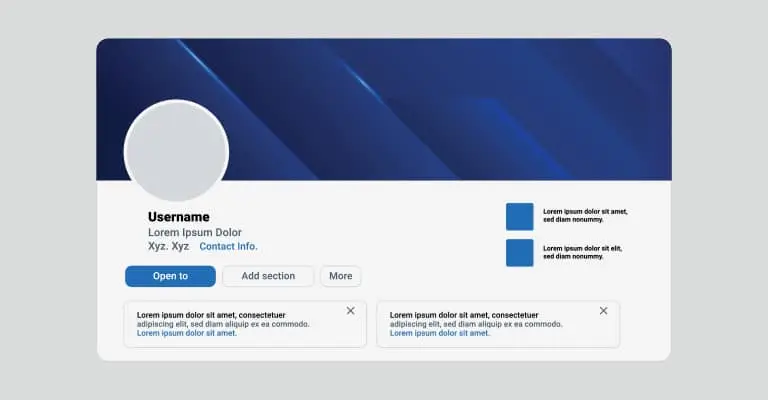
LinkedIn is where most recruiters start their search: about 90% use it for talent scouting (LinkedIn), and complete profiles are 40 times more likely to land job offers. Your profile needs the same keyword strategy as your resume.
Headline and About Section
Your headline should describe your value, not just your school year. Try a format like “Marketing Student | Content Strategy | Seeking Summer Internship.” See this guide for a full walkthrough of every field to optimize your LinkedIn profile. Your About section should cover who you are, what you have done, and what you want next.
Write it in first person, and keep it specific rather than generic.
Experience and Skills
List internships, campus jobs, volunteer roles, and major class projects under Experience. Add three to five skills matching your target postings, then ask classmates or supervisors for endorsements.
Without formal work experience, list projects and leadership roles instead; evidence matters more than job titles.
An Incomplete Profile
The most common mistake is an incomplete profile: no photo, no summary, no activity. See this guide to building your LinkedIn brand for a full breakdown of what to fix.
A Stale Profile
A stale profile, one untouched for months, signals disengagement. Recruiters notice these gaps quickly and move on to the next candidate.
Step 3: Build a Personal Brand and Digital Presence
A resume and LinkedIn profile show what you have done; a personal brand shows how you think and what makes you different. This matters: 98% of employers research candidates online before deciding to interview them.
You want employers to find a consistent, professional digital footprint about you, meaning the online trail employers find when they search your name. Building a personal brand website gives you a place to bring it all together.
Why a Personal Website Helps
A personal website works differently from LinkedIn: no length limits, no algorithm, and no competing profiles crowding the page. It gives you room to explain your projects with real context.
AI search tools increasingly pull information from personal websites, not just LinkedIn, making a website a searchable asset beyond traditional search engines.
What to Include
Include a short bio, three to five work samples, and a clear way to contact you, plus testimonials from professors or supervisors if you have them.
Keep the design simple and easy to navigate: a clean, one-page site beats an elaborate one that takes months to finish.
Step 4: Network Before You Need a Job

Personal referrals account for 25% of entry-level hires, more than any other single factor (Cengage Group). Yet many students only reach out to their network when they urgently need a job, and this approach rarely works. A career development plan built around consistent networking, not urgent asks, produces far better results. Nearly half of Gen Z say lacking the right network is their biggest barrier (LinkedIn).
Building relationships months before you apply makes people far more willing to refer you when a role opens.
Informational Interviews
An informational interview is a short conversation with a professional in your target field, focused on learning rather than on asking for a job. Keep your request under 150 words and easy to decline.
Ask thoughtful questions about their path and their day-to-day work. Send a thank-you note within 48 hours.
Career Fairs and Alumni Networks
Career fairs work best when you research employers and prepare specific questions beforehand. Alums from your school often talk with current students, and LinkedIn makes them easy to find.
Follow up with everyone you meet within two days, and reference something specific from your conversation.
Step 5: Target Roles and Manage Your Timeline
Large employers concentrate recruiting into two windows: September through November, and January through February. Missing these windows sharply shrinks the pool of open roles.
When your timeline or job search strategy feels unclear, a personal brand coach can help you build a plan around these cycles.
Understand Recruiting Cycles
Most large companies set entry-level hiring calendars months in advance. Applying after these cycles close means competing for a smaller, lower-quality pool of late openings.
Mark these windows on your calendar at the start of the school year, and prepare your materials before they open.
Apply With Intention, Not Volume
Hundreds of random applications rarely beat a smaller number of well-matched ones. Tailored applications pass ATS screening more often and show genuine interest.
Skip postings that require skills you lack rather than force a mismatched application.
Step 6: Prepare for Interviews With the STAR Method
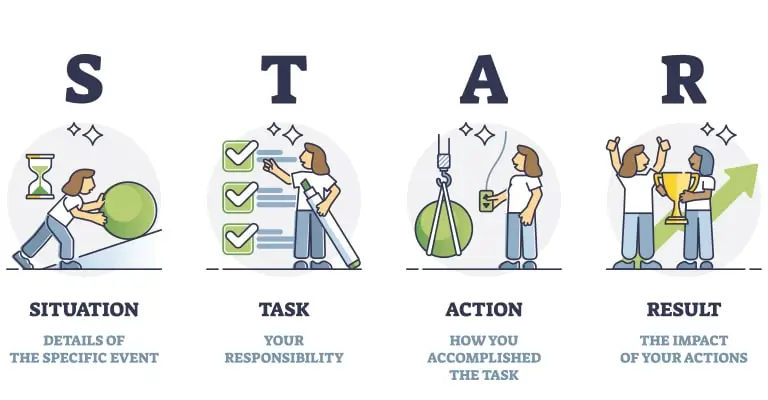
How the STAR Method Works
STAR stands for Situation, Task, Action, and Result. It gives your interview answers a clear structure instead of a rambling story.
Briefly describe the situation, explain your task, detail the action you took, and conclude with a measurable result. Practice two or three STAR stories before every interview.
Common Interview Mistakes
Many students fail to provide specific examples and instead rely on vague statements like “I’m a hard worker,” leaving interviewers with nothing concrete to remember.
Prepare strong examples in advance rather than searching for one on the spot. Write out your STAR stories before the interview, not during it.
Step 7: Negotiate Your Offer
Many new grads accept the first offer out of relief or fear it will disappear, a costly habit. Most employers expect entry-level candidates to negotiate, even when the base salary is fixed (NACE). A polite, well-reasoned ask rarely costs you the offer.
Let the Employer Name a Number First
If asked for a number early, say you want to understand the role’s full scope first. This keeps you from naming a low starting point for the whole negotiation. Once you have an offer, compare it against market data on Glassdoor or LinkedIn Salary before you respond.
Negotiate the Full Package
If base salary is fixed, other terms often are not. Start date, remote days, a signing bonus, and a budget for courses or certifications are all reasonable to raise. Keep your tone collaborative and lead with genuine enthusiasm for the role.
Overcoming Imposter Syndrome in Your Job Search
Imposter syndrome is the belief that you are less qualified than others think you are. About 1 in 5 college students experiences it during their undergraduate years, leading many qualified students to avoid applying altogether.
Students with imposter syndrome feel twice as nervous during interviews and often settle for lower pay due to self-doubt.
When you notice yourself avoiding roles you can do, apply anyway and track your wins as proof against the doubt.
People Also Ask

How many jobs should I apply to as a new graduate?
Focus on quality over quantity: fewer, well-tailored applications to well-matched roles outperform mass applications.
Does a personal website really help an entry-level job search?
Yes. It gives you more room than a resume or LinkedIn to show your work, and it helps AI search tools find you.
What is the best time of year to start an entry-level job search?
Start before major recruiting cycles open in September and January. Earlier preparation gives you more time to network and refine your materials.
How important is LinkedIn compared to a resume?
Both matter, but recruiters check LinkedIn first. A complete, keyword-rich profile boosts your visibility.
What should I do if I have no work experience?
List class projects, campus leadership, and volunteer work instead. Evidence of skills matters more than job titles.
Entry-Level Job Search Checklist
| Status | Task |
|---|---|
| [ ] | Resume formatted for ATS with matching keywords |
| [ ] | LinkedIn profile complete with photo, headline, and About section |
| [ ] | Personal website or portfolio live. |
| [ ] | Three STAR stories prepared for interviews. |
| [ ] | Five target companies identified and researched |
| [ ] | Two informational interviews are scheduled this month |
| [ ] | Application tracker set up to log progress. |
| [ ] | Recruiting cycle dates marked on your calendar |
| [ ] | Market salary data is researched before any offer conversation |
Final Entry-Level Job Search Tips to Remember
An entry-level job search takes more strategy than it used to, but the fundamentals still work. A tailored resume, a strong LinkedIn profile, real networking, and honest interview preparation give you a genuine edge.
These tips are not complicated, but they take consistent effort. The students who get hired are not always the most qualified; they are the most prepared and the most visible.
Build your personal brand website today and give employers a clear, consistent reason to choose you.
FAQ
What makes an entry-level job search different from a general job search?
The main difference is how you prove your value. Experienced candidates lean on past results; you rely more on class projects, internships, and volunteer work to demonstrate your skills. Entry-level postings also draw far more applicants per opening, so a tailored resume and active networking matter even more. Fundamentals like ATS optimization and interview preparation still apply at every career stage.
What does ATS stand for?
ATS stands for Applicant Tracking System. This software scans and filters resumes before a person reviews them, checking for keywords, job titles, and skills that match the posting. Many employers rely on it as their first screening step. Tables, columns, or graphics often fail to parse correctly, triggering rejection before a human sees them. A clean, single-column resume with clear section headers gives your application the best chance of passing through.
How long should an entry-level job search take?
Most entry-level job searches take three to six months, depending on your field, location, and how early you start networking. Starting during junior year gives you more time to build relationships, gather proof of your skills, and refine your resume before recruiting cycles open. Students who wait until senior year compete for a smaller pool of late openings. Consistent, weekly effort across networking, applications, and interview practice shortens the timeline more than sporadic bursts of activity.
Do I need a personal website for an entry-level job search?
A personal website is not required, but it gives you more room than a resume or LinkedIn profile to show your work. You can include a short bio, three to five work samples, and a clear way for employers to contact you. AI search tools increasingly pull information from personal websites, not just LinkedIn, which makes a website a searchable asset. Even a simple, one-page site can set you apart from candidates who rely on a resume alone.
What is the STAR method?
The STAR method is an interview technique that stands for Situation, Task, Action, and Result, which gives clear, specific answers rather than a rambling story. You describe the situation, explain your task, detail the action you took, and end with a measurable result. Preparing five to seven STAR stories from internships, class projects, or volunteer work makes your answers sound natural rather than rehearsed.
How many hours a week should I spend job searching?
Focus on a consistent, targeted effort rather than a strict hour count. A few well-researched, tailored applications each week beat dozens of generic ones. Set aside dedicated time for networking, since referrals produce more hires than job boards do. A simple weekly routine, such as reaching out to contacts, researching target companies, and refining your resume, builds momentum. It does not demand a rigid schedule that you cannot sustain for months.
What is the difference between a mentor and a referral source?
A mentor guides your development over time, sharing advice, feedback, and insight from their own experience. A referral source vouches for you directly to a specific employer, moving your application past the initial screening stage. Both play a valuable role in networking. A mentor helps you build the skills and judgment employers want; a referral source helps you get noticed once you have those skills.
Should I apply to jobs I am not fully qualified for?
Yes, if you meet most of the core requirements in the posting. Employers rarely expect entry-level candidates to check every box, since job descriptions often outline an ideal candidate rather than a strict minimum. Target roles where you meet the essential qualifications, and use your resume and cover letter to highlight transferable skills for the rest. Skipping every role that lists an unfamiliar tool or certification costs you strong opportunities.
How do I handle rejection during my job search?
Track every application and interview as data, not a verdict on your worth. With hundreds of applicants competing for a single posting, volume alone rejects most qualified candidates. Ask for feedback and look for patterns: few interviews signal a resume issue, and interviews without offers signal an interview-preparation issue. Treating rejection as structural, not personal, keeps you moving forward and sharpens your strategy instead of draining your momentum.
What is an informational interview?
An informational interview is a short, low-pressure conversation with a professional in your target field, aimed at learning and relationship-building, not at requesting a job. Ask about their career path, day-to-day work, and advice for someone entering the field. Keep your request under 150 words, make it easy to decline, and send a thank-you note within 48 hours. These conversations often lead to referrals later, though that is never the stated goal.
Should I negotiate my first job offer?
Yes. Most employers expect it and build room into their opening offer. If asked for a number before an offer is extended, say you would like to learn the role’s full scope first. This keeps you from naming a low number that sets the tone for the negotiation. Once you have an offer, compare it against market data and counter with a reasonable range based on your research. A polite, well-reasoned request rarely costs you the offer.
Glossary
| Term | Definition |
|---|---|
| Entry-Level Job Search | The process of finding and applying for a first professional role after college. |
| Applicant Tracking System (ATS) | Software that scans and filters resumes before human review. |
| Personal Brand | The consistent, intentional story you present about your skills and values online. |
| Referral | A recommendation from someone within the company who supports your application. |
| Informational Interview | A short conversation with a professional for learning, not job-seeking. |
| STAR Method | An interview framework covering Situation, Task, Action, and Result. |
| Recruiting Cycle | The set period when major employers actively hire entry-level candidates. |
| Elevator Pitch | A brief, spoken introduction that summarizes who you are and what you offer. |
| Imposter Syndrome | The persistent belief that you are less qualified than others perceive you to be. |
| LinkedIn Creator Mode | A LinkedIn setting that increases content visibility and adds topic tags to a profile. |
| Salary Negotiation | The discussion in which a candidate asks an employer to adjust the salary or other terms of a job offer. |